
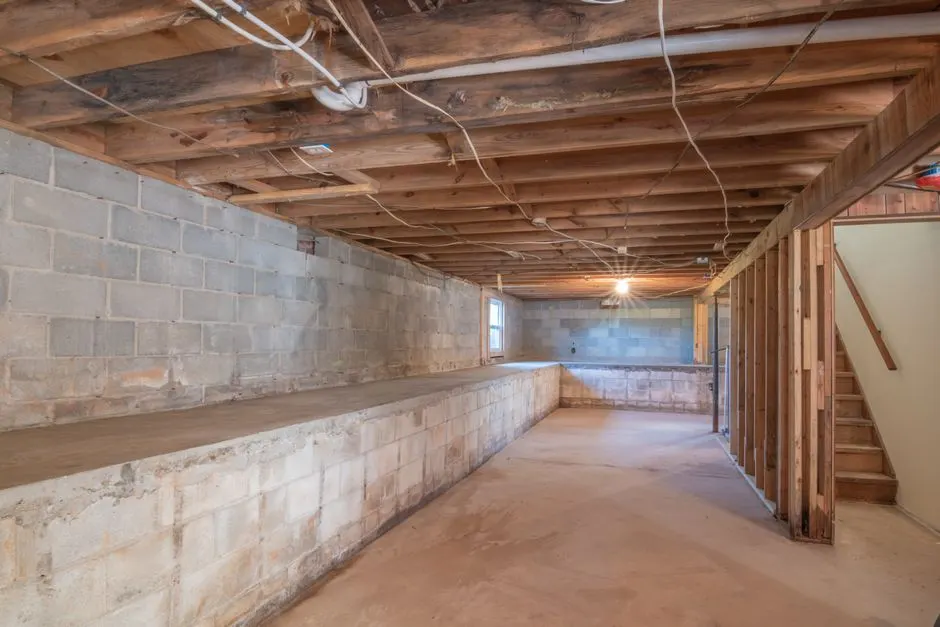
Getting rid of mold in a crawl space after flooding means removing the standing water, drying the space to under 15% wood moisture content, killing the mold with a fungicidal treatment, and then sealing the space so it never floods again. In Philadelphia, that last step matters more than anywhere - the city's 2026 storm season has already pushed the Schuylkill and Cobbs Creek over their banks twice, and each flood leaves thousands of rowhouse crawl spaces wet. This guide walks you through the full process: what to do in the first 24 hours, how to treat mold on joists and subfloor, what it costs here, and when to hand it off to a crew that does this every week.
Why crawl space mold explodes after a flood
Crawl space mold after a flood in Philadelphia grows because the space stays above 60% relative humidity for weeks after the water recedes. Mold spores need three things: moisture, organic material (wood joists, subfloor, cardboard, insulation paper), and temperatures between 40°F and 100°F. A flooded crawl space delivers all three at once.
Here's the part most homeowners miss. The water you can see is gone in a day or two. The water soaked into the mud sill, the rim joist, and the bottom plate of your framing stays for months. We've pulled moisture meters off Philadelphia crawl space joists reading 28% six weeks after a storm - that's a petri dish, not a floor structure.
Three conditions make Philadelphia crawl spaces worse than most:
- Age. Most rowhouses in Fishtown, Kensington, and South Philly were built between 1890 and 1930. Original mortar and stone foundations wick groundwater like a sponge.
- Ventilation. Old code required foundation vents. In a humid climate, those vents pull damp summer air into a cool crawl space and condense it on the joists.
- Grade. Philadelphia sits on a tidal river system. After a heavy nor'easter, the water table itself rises - water comes up through the slab, not just in through the vents.
If you've had a flood and you're seeing white or black fuzz on the joists, don't wait. The colony doubles in size roughly every 24 to 48 hours while the wood is wet.
How do I get rid of mold in my crawl space after flooding in Philadelphia?
You get rid of crawl space mold after flooding in Philadelphia by removing all standing water within 24 hours, running high-capacity dehumidifiers until the wood reads below 15% moisture, treating every moldy surface with a fungicide, and then installing a sealed vapor barrier so the space stays dry. Skip any one of those steps and the mold returns within a season.
How to get rid of mold in crawl space after flooding is really a sequence question - order matters. If you spray fungicide on wet wood, you kill the surface mold and leave the roots alive inside the grain. If you install a vapor barrier over damp concrete, you trap moisture under the plastic and grow a worse colony.
Dry first. Treat second. Seal last. That's the whole method.
For homeowners who want the inspection side handled properly - air sampling, moisture mapping, and a written scope - we offer mold inspection and testing Philadelphia PA before any remediation begins.
Step-by-step: flooded crawl space cleanup and mold remediation
Flooded crawl space cleanup and mold remediation in Philadelphia follows eight steps. Here's the sequence our crews run, and the one you can run yourself if the contamination is light and the space is accessible.
1. Safety first
Kill power to any circuits running through the crawl space at the breaker. Wear an N95 or P100 respirator, nitrile gloves, and eye protection. If the water came from a sewage backup - common in Philadelphia rowhouses where the storm line and sanitary line share a lateral - stop and call a pro. That's a Category 3 water loss and it needs disinfection, not just drying.
2. Extract the standing water
Use a wet/dry vac or a submersible pump. A 500-square-foot crawl space holding 2 inches of water holds about 620 gallons. A wet/dry vac moves 10 to 15 gallons per minute; a submersible pump moves 30 to 50. Rent the pump.
3. Remove soaked debris
Cardboard boxes, old insulation, fallen duct wrap, wood scraps - all of it comes out in sealed bags. Fiberglass batt insulation that got wet is trash. It never dries evenly and it holds mold spores against the joists.
4. Dry the structure
This is the step people rush. You need commercial dehumidifiers - not a box fan and a household unit. Target: wood moisture content below 15%, relative humidity below 50%. In a Philadelphia crawl space in October, that takes 3 to 5 days with two 70-pint dehumidifiers running continuously. In July, it takes 5 to 7.
We bring in dehumidification services Philadelphia PA with LGR (low-grain refrigerant) units that pull water out of the air at 40°F dew point - far more aggressive than anything you can rent at a big-box store.
5. HEPA vacuum all surfaces
Before you spray anything, vacuum the joists, subfloor, and foundation walls with a HEPA-filtered vacuum. This removes the loose spores. Spraying first just knocks them into the air.
6. Apply fungicidal treatment
Use an EPA-registered fungicide. For light surface mold on framing lumber, a borate-based treatment penetrates the wood and leaves a residual that stops regrowth. For heavy black mold on joists - the kind that smells like wet dirt and leaves a musty stain - you're looking at black mold removal Philadelphia PA with containment and negative air pressure.
7. Repair the source
Mold doesn't grow because you had a flood. It grows because water got in and had nowhere to go. Fix the entry point: regrade the soil around the foundation, repair the gutter that dumps next to the wall, or install a sump pump if the water table is the problem.
8. Encapsulate
Once the space is dry and clean, seal it. We cover this in detail below.
What it costs in Philadelphia in 2026
Crawl space mold removal in Philadelphia in 2026 runs $1,800 to $6,500 for most rowhouses, with the average job landing around $3,200. Price depends on square footage, how much framing is contaminated, and whether encapsulation is included.
Here's how the numbers break down for a typical 500- to 800-square-foot Philadelphia crawl space:
- Inspection and moisture mapping: $250-$450
- Water extraction: $400-$900
- Structural drying (3-5 days): $700-$1,500
- HEPA vacuum and fungicidal treatment: $600-$1,400
- Contaminated debris removal: $200-$600
- Crawl space encapsulation (separate): $2,500-$7,000
If your insurance covers the flood loss, the water damage portion is usually claimable. Mold remediation itself is often excluded unless the mold is a direct result of a covered peril - read your policy before you assume. We've worked with every major carrier writing policies in Philadelphia, and we document the job so your adjuster has what they need.
Cash price for a full crawl space job - extraction through encapsulation - usually lands between $4,000 and $9,500 in this market.
Does crawl space encapsulation prevent mold after flooding in Philadelphia?
Yes - crawl space encapsulation after flooding in Philadelphia is the single most effective way to prevent mold from coming back, because it cuts the space off from both ground moisture and humid outside air. Encapsulation means sealing the floor and walls with a reinforced vapor barrier, sealing the vents, and adding a dehumidifier to control the sealed volume.
Think of it this way. An unencapsulated crawl space is an open window to the weather. Every humid day, every rainstorm, every rise in the water table feeds it. A properly encapsulated crawl space is a sealed box with a dehumidifier holding it at 45% relative humidity year-round. Mold can't grow below 60%.
The materials matter. We use a 20-mil reinforced liner - not the 6-mil plastic you'll find at a hardware store. The 6-mil tears during installation, degrades under UV and foot traffic, and fails within 3 to 5 years. A 20-mil liner with taped and mastic-sealed seams lasts 20-plus years.
For Philadelphia homeowners dealing with a crawl space that floods every time Cobbs Creek or the Schuylkill crests, we install crawl space encapsulation Philadelphia PA along with a sump and drainage system so the space stays dry through the next storm, not just this one.
Common mistakes we see after a flooded crawl space
We've walked into hundreds of Philadelphia crawl spaces after floods. These are the mistakes that cost homeowners the most.
- Bleaching the joists and calling it done. Household bleach is 90% water. You're adding moisture to wet wood and killing only the surface mold. It also corrodes hangers and fasteners.
- Running a box fan and a household dehumidifier. A 30-pint residential unit pulls maybe 30 pints a day. You need to remove 50 to 100 gallons from a flooded crawl space. That's a 3-week job with the wrong equipment.
- Reinstalling wet insulation. If the batts got soaked, they're gone. Reinstalling them traps moisture against the joists and grows mold you can't see.
- Sealing the vents without encapsulating. Closing the vents alone traps ground moisture inside. You have to seal the floor too.
- Ignoring the source. If you don't fix the grading, the gutter, or the sump, the next storm undoes everything.
- Not documenting for insurance. Photos of the water line, moisture readings, and the mold before cleanup are worth thousands at claim time.
When to call a professional
Call a professional crawl space mold crew in Philadelphia when the contaminated area exceeds 10 square feet, when the mold is black or fuzzy on structural framing, when the floodwater came from a sewage backup, or when anyone in the house has asthma or a compromised immune system.
Those are the four triggers. If you hit any one of them, DIY is the wrong call - you'll spend $400 on equipment, breathe spores for a week, and still end up hiring us to redo it.
Mold Removal Philly handles crawl space work across Philadelphia County - rowhouses, twins, and detached homes from Roxborough down to Deep South. We inspect, we test, we remediate, and we seal. One crew, one scope, one price. If you're not sure whether your situation needs a full remediation or just a cleanup, we'll tell you straight on the phone.
Frequently Asked Questions
How do I get rid of mold in my crawl space after flooding in Philadelphia?
Extract all standing water within 24 hours, run commercial dehumidifiers until wood moisture drops below 15%, HEPA vacuum every surface, apply an EPA-registered fungicide, and then seal the space with a vapor barrier. The full sequence takes 5 to 10 days for a typical Philadelphia rowhouse crawl space.
Is crawl space mold after flooding dangerous in Pennsylvania?
Yes. Common species like Stachybotrys, Aspergillus, and Penicillium release spores that trigger asthma, sinus infections, and allergic reactions. Pennsylvania's humid summers make crawl space colonies worse than in drier states. Anyone with respiratory conditions should stay out of the space until it's remediated.
How much does crawl space mold removal cost in Philadelphia?
Typical 2026 pricing in Philadelphia runs $1,800 to $6,500, averaging around $3,200 for a 500- to 800-square-foot crawl space. Adding encapsulation brings the total to $4,000-$9,500. Sewage-contaminated floods cost more because of required disinfection.
Does crawl space encapsulation prevent mold after flooding in Philadelphia?
Yes. A sealed 20-mil vapor barrier plus a dehumidifier holds the crawl space below 50% relative humidity year-round, and mold can't grow below 60%. Encapsulation is the only permanent fix for Philadelphia crawl spaces that flood repeatedly from the water table or storm surges.
Can I just spray bleach and leave it?
No. Bleach is mostly water, so it adds moisture to already-wet wood and only kills surface mold. It also corrodes metal hangers. Use an EPA-registered fungicide after the structure is dry - or hire a crew that does this daily.
Get help with Mold removal in Philadelphia
If your crawl space flooded and you're seeing mold on the joists, we can be there this week. We handle inspection, extraction, drying, remediation, and encapsulation - start to finish.
Call Mold Removal Philly at +1 2152813400 for a same-week crawl space assessment anywhere in Philadelphia.